Freedom & Democracy
Reagan Institute Strategy Group
Overview
The Reagan Institute Strategy Group (RISG) is founded on the notion that America’s role in the world is indispensable to preserving the free, open, and peaceful political and economic system that provides the foundation for how countries interact.
.
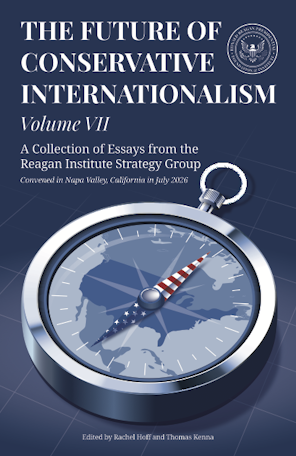
The Future of Conservative Internationalism, Volume VII
The 2026 collection is available now.
About the Reagan Institute Strategy Group
While in recent years there has been much discussion of the decline of the American-led, rules-based international order, it is worth stepping back to assess what is really at stake. In the context of rising threats from authoritarian regimes, the question of America’s global leadership is crucial to the survival of the free world itself.
While President Reagan led our country through a different geostrategic environment, the Reagan Institute is dedicated to using the timeless principles and vision he championed as a lens through which to view the current set of challenges and opportunities before us. That is why the Institute gathers leaders from the foreign policy and national security arenas to discuss the way forward for those who believe President Reagan’s example offers a roadmap for navigating today’s world. The essays collected here reflect the discussions that have taken place at annual RISG Summer Retreats.


The Reagan Institute Strategy Group is committed to a core set of beliefs: that American leadership, including military strength and economic engagement, is the best guarantor of peace, security, and prosperity; that America’s national success is inextricably linked to the that of the free world; and that American values are universal, as freedom and human dignity are the birthright of all peoples regardless of their country of birth.
The goal of RISG is to chart a course for reviving a Reaganesque approach to foreign policy and national security. Any set of policy ideas is only valuable insofar as it is politically viable. And with American leadership under assault from both ends of the political spectrum, we need fresh thinking to sustain its relevance. Our hope is that the following essays will serve as the start of a conversation about the principles and policies that will promote a world where freedom and opportunity will flourish—but also that are responsive to the shifting political environment.
Fundamentally, the Reagan Institute Strategy Group is not a nostalgia exercise yearning for a bygone era that will not return. Rather, it is a forward-looking endeavor that focuses on the new ideas, priorities, and frameworks needed for meeting the challenges and opportunities of the 21st century based on the timeless vision and values of our 40th President.
The Future of Conservative Internationalism
The Reagan Institute Strategy Group (RISG) is dedicated to studying, developing, and promoting U.S. foreign policy and national security principles and priorities for the 21st century. RISG is working to develop a set of policies that are responsive to today’s political environment and promote America’s security and prosperity, as well as a peaceful international order where free peoples and economic freedom will flourish. RISG gathers conservative leaders with extensive experience in national security and foreign policy who will continue to be involved in the policy process both in and out of government.
Past Collections
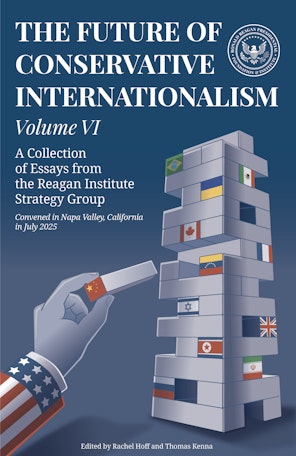
The Future of Conservative Internationalism, Volume VI (Volume 6)
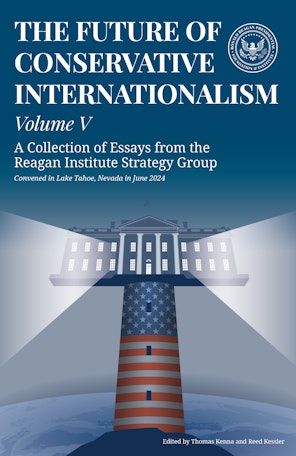
The Future of Conservative Internationalism, Volume V (Volume 5)
Future of Conservative Internationalism, Volume IV (Volume 4)
Future of Conservative Internationalism, Volume III (Volume 3)
Future of Conservative Internationalism, Volume II (Volume 2)
The Future of Conservative Internationalism: Volume I (Volume 1)


The Future of Conservative Internationalism, Volume VII
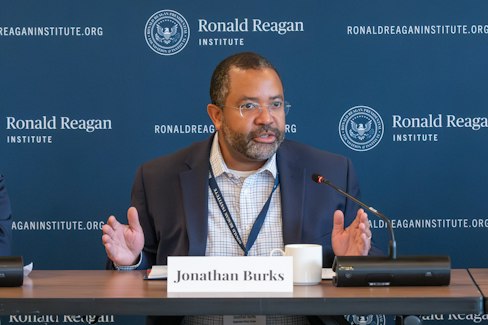
International Economic Policy as an Instrument of National Power
Author: Jonathan Burks
Where Does Advancing Freedom Fit into the Trump Administration’s National Security Strategy?
Author: Daniel Twining
A Clash Within Civilizations
Author: Mike Watson

A False Sense of U.S.-China Security
Author: Zack Cooper
Winning the Competition, Not the Negotiation: Reflections on the Trump-Xi Summit
Author: Michael Sobolik

Slouching Toward Beijing: The Trump-Xi Summit and the Trajectory of U.S.-China Strategic Competition
Author: Dustin Walker

Deterrence in the Modern Era: A 360-Degree Industrial Approach to European Security
Author: Daniel Fata

A U.S. and Allied Strategy for Greenland
Author: Matthew Kroenig
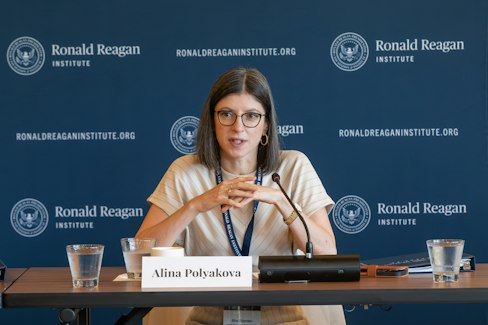
Who Holds the Cards? A Path to Ending Russia’s War Against Ukraine
Author: Alina Polyakova
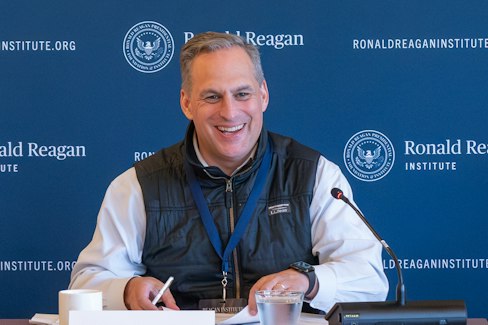
Burden-Sharing, Hard Power, and the U.S.-Israel Alliance
Author: Seth Jones
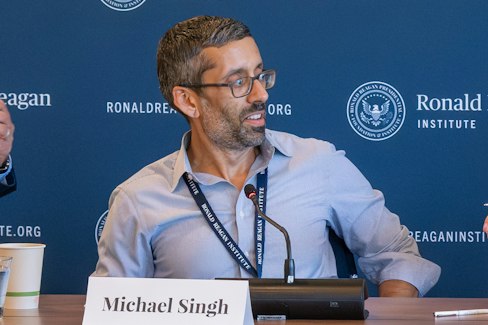
Getting Iran Policy Back on Track
Author: Michael Singh
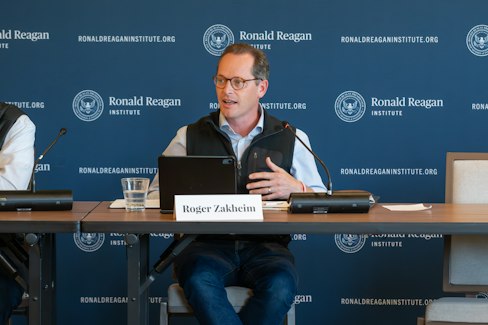
U.S. Presence and Posture in a Post-Epic Fury Middle East
Author: Roger Zakheim


The Future of Conservative Internationalism, Volume VII (continued)

U.S. Policy That Favors Freedom in Venezuela and Cuba
Author: Jamie Fly
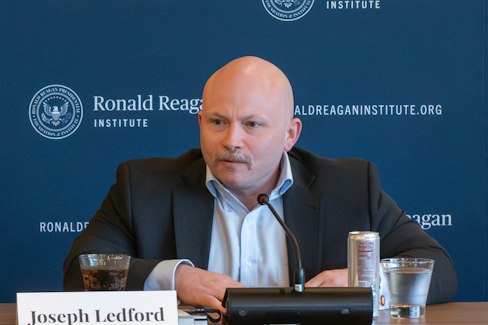
Americas First, Authoritarians Last: The Trump Corollary as a Great-Power Competition Strategy
Author: Joseph Ledford
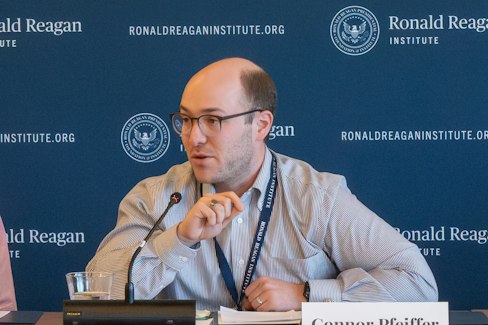
“A Special Place with a Special Destiny”: How the United States Can Protect the Homeland and Expand Prosperity in the Western Hemisphere
Author: Connor Pfeiffer

The End of Sanctuary: The Evolution of Homeland Defense
Author: Kari Bingen
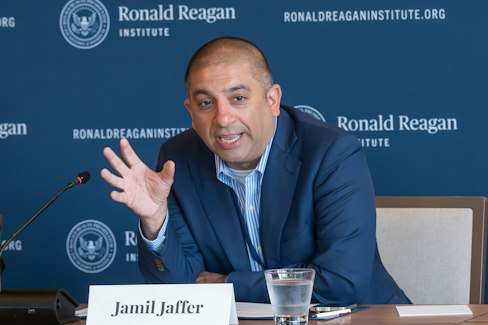
Spending Right: How Conservatives Can Make Defense Spending Great Again
Author: Jamil Jaffer

Simultaneity: You Only Need a Two-Body Problem to Be Screwed
Author: Mark Montgomery


The Future of Conservative Internationalism, Volume VI
80 Years of GOP Foreign Policy Debates
Author: William Inboden

American Realism is Unrealistic
Author: Matthew Kroenig
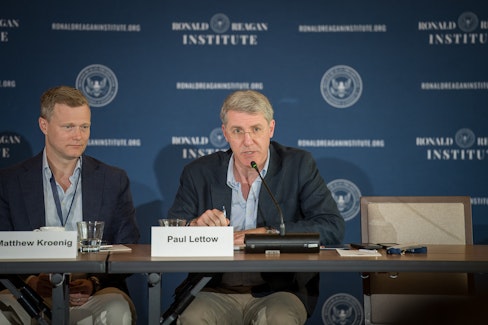
The GOP’s Foreign Policy Arc: Future History
Author: Paul Lettow
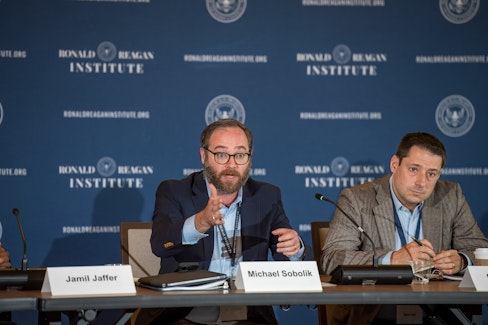
Thinking Too Small: Why Washington Lacks Resolve to Win the New Cold War
Author: Michael Sobolik
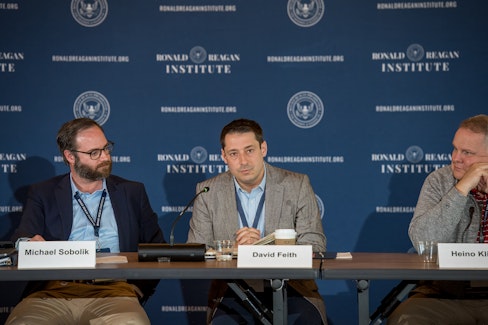
A New Cold War in an Age of Doubt
Author: David Feith

The Cold War Paradigm is Inadequate for U.S.-China Strategic Competition
Author: Heino Klinck


The Future of Conservative Internationalism, Volume VI (continued)

What “Americas First” Tells Us About “America First”
Author: Carrie Filipetti
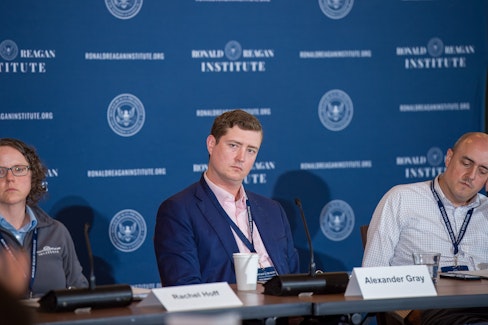
The Trump Administration’s Foreign Policy Goals: A Hemispheric Defense of U.S. Interests
Author: Alexander Gray
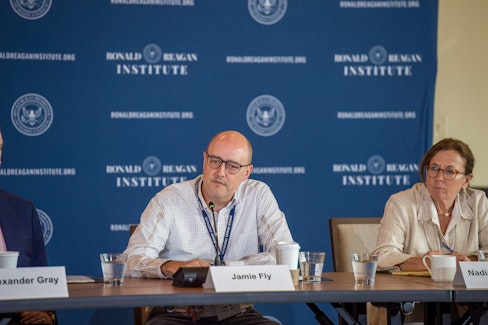
The Trump Administration’s Foreign Policy Goals: A Hemispheric Defense of U.S. Interests
Author: Jamie Fly

The Trump Administration’s Foreign Policy Goals: A Hemispheric Defense of U.S. Interests
Author: Nadia Schadlow
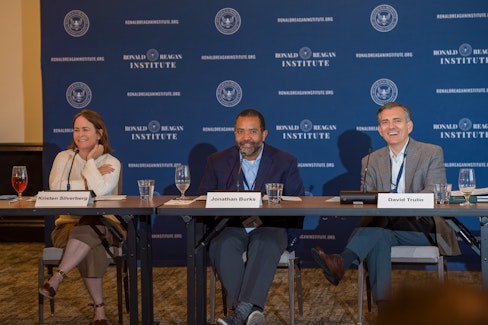
Tariffs, Trade & Geoeconomics
Author: Jonathan Burks

Trade Wars and the Future of Conservative Geoeconomics
Author: Kristen Silverberg


Join Our Newsletter
Never miss an update.
Get the latest news, events, publications, and more from the Reagan Institute delivered right to your inbox.
